How to Choose a Plastic Injection Molder: A Selection Guide for OEMs
Last Updated: August 3, 2026
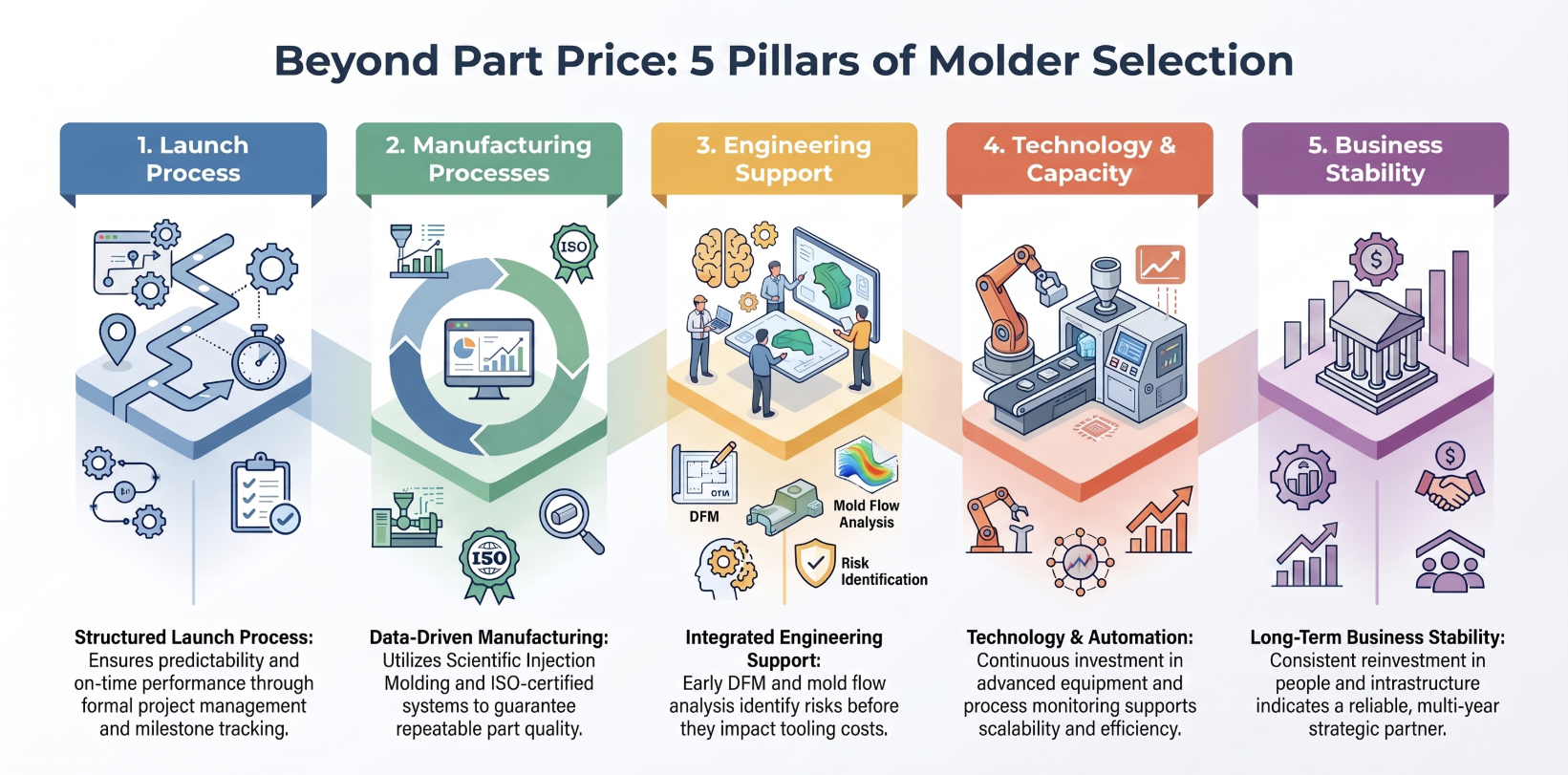
Choosing the right plastic injection molder is one of the most important decisions you’ll make for your product and supply chain. While part price often receives the most attention, factors such as launch performance, manufacturing consistency, engineering expertise, and long-term business stability can have a much greater impact on quality, delivery, and total cost of ownership.
Whether you’re launching a new product, transferring an existing tool, or evaluating alternative plastic injection molding companies, it’s important to look beyond basic manufacturing capabilities. The best injection molding supplier serves as a strategic partner—helping you reduce risk, improve predictability, and support your goals throughout the product lifecycle.
This selection guide outlines five key factors to evaluate when choosing a plastic injection molding supplier, along with practical questions you can use to compare potential partners and identify the right fit for your organization.
1. Evaluate the Molder’s Launch Process
A successful launch sets the foundation for the entire life of a program. Unfortunately, product launches are often where delays, communication breakdowns, tooling issues, material challenges, and production problems first emerge. That makes it critical to select a plastic injection molder with a structured launch process that provides visibility, accountability, and clear communication throughout the project.
When evaluating plastic injection molding companies, look beyond technical capabilities and understand how projects are managed from kickoff through production. A strong injection molding supplier should have defined workflows, milestone tracking, and processes for identifying and resolving issues before they affect timelines, quality, or cost. They should also be eager to provide transparent data proving their PPAP performance, on-time delivery rates, and scrap rates.
Questions to Ask
- Does the company have a formal project management or launch process?
- How are project milestones tracked and communicated?
- What is the company’s on-time launch performance?
- How are delays, tooling issues, or material challenges escalated and managed?
- How does the company anticipate and communicate delays?
Key Takeaways: How to Choose a Plastic Injection Molder
Q: What should OEMs look for in a plastic injection molder?
A: OEMs should evaluate a molder’s launch process, manufacturing processes, engineering capabilities, technology investments, and long-term business stability—not just part price.
Q: Why is a supplier’s launch process important?
A: A structured launch process helps reduce delays, improve communication, and create greater visibility into project status throughout development and production.
Q: What manufacturing capabilities matter most?
A: Look for ISO-certified quality systems, data-driven manufacturing processes, Scientific Injection Molding practices, and a demonstrated commitment to continuous improvement.
Q: Why is engineering support important?
A: Strong engineering resources can help identify manufacturability, tooling, material, and production challenges before they affect cost, quality, or launch timelines.
Q: How can OEMs evaluate a supplier’s long-term reliability?
A: Review evidence of ongoing investment in people, processes, technology, automation, equipment, and employee development. Long-term reinvestment often indicates long-term stability.
New Berlin Plastics’ Approach
At New Berlin Plastics, every project is managed through LaunchLogic, our proprietary project management system. LaunchLogic provides structured project management, real-time visibility, and accountability throughout the launch process, helping customers move from development to production with greater confidence. The result is a 98% on-time launch track record across more than 100 simultaneous open customer projects, paired with a 2.2% internal scrap rate.
2. Look for Proven Manufacturing Processes
A plastic injection molder’s manufacturing processes have a direct impact on part quality, consistency, delivery performance, and total cost of ownership. While many plastic injection molding companies claim to have strong quality systems, the best partners can demonstrate how their processes reduce variation and create repeatable results over the life of a program.
Look for evidence of process discipline and continuous improvement when evaluating an injection molding supplier. Certifications, documented procedures, process monitoring, and data-driven manufacturing practices can all help ensure consistent production regardless of shifts, operators, or production runs. Strong processes don’t just improve quality—they help reduce risk throughout your supply chain.
Questions to Ask
- Is the company certified to recognized quality standards such as ISO 9001?
- How do they measure and maintain process consistency?
- Do they utilize Scientific Injection Molding principles?
- What quality metrics do they track and review?
- How do they drive continuous improvement across their operations?
New Berlin Plastics’ Approach
At New Berlin Plastics, our manufacturing approach is built around Scientific Injection Molding and a commitment to continuous improvement. We use data-driven processes to develop robust, repeatable manufacturing methods that help minimize variation and improve consistency. Combined with our ISO-certified quality system, these practices help ensure reliable production outcomes and a lower-risk experience for our customers.
3. Assess Engineering and Technical Support
Strong engineering support can help prevent costly problems before they impact tooling, production, or product performance. Whether you’re developing a new part or transferring an existing program, the right plastic injection manufacturer should be able to provide technical guidance that improves manufacturability, reduces risk, and supports long-term production success.
When assessing a plastic injection molding supplier, look beyond molding capabilities and evaluate the engineering resources available to your team. The most effective partners can provide expertise in part design, material selection, tooling optimization, and process validation. Addressing these considerations early can reduce development costs, accelerate timelines, and improve overall product quality.
Questions to Ask
- Does the company offer design for manufacturability (DFM) support?
- Can they perform mold flow analysis (MFA) before tooling is built?
- Do they provide guidance on resin selection and material performance?
- How do they identify and mitigate production risks during development?
- Can they provide examples of engineering-driven improvements that delivered measurable value?
New Berlin Plastics’ Approach
Our engineering support is integrated throughout the development process. The New Berlin Plastics team helps customers optimize part and mold designs, validate performance through mold flow analysis, and evaluate resin options based on application requirements. By identifying potential challenges early, we help reduce risk, improve manufacturability, and create a smoother path from concept to production. Want to know more? Read how New Berlin Plastics helps customers stay resilient despite resin price volatility.
4. Review Technology, Automation, and Capacity
The technology and equipment behind a plastic injection molder plays a significant role in quality, consistency, and scalability. As customer requirements evolve, leading injection molding companies continue investing in automation, process monitoring, and manufacturing equipment that improve performance while reducing risk. A supplier’s willingness to invest in its operations often reflects its commitment to long-term customer success.
When evaluating an injection molding supplier, look beyond machine counts and press tonnage. Consider how technology is used to improve process control, increase efficiency, enhance quality, and support future growth. The right partner should have the capacity and technical capabilities to support your program not only today, but as requirements change over time.
Questions to Ask
- How regularly does the company invest in new equipment and technology?
- What level of automation is used in production?
- How do they monitor and control manufacturing processes?
- Can they support future production growth and changing demand?
- What technologies are in place to improve consistency, quality, and efficiency?
New Berlin Plastics’ Approach
New Berlin Plastics continually invests in technology that strengthens quality, efficiency, and manufacturing performance. Our approach combines process monitoring, automation, and ongoing equipment investments to improve consistency, increase operational flexibility, and support evolving customer requirements.
5. Evaluate Long-Term Business Stability and Commitment
Selecting a plastic injection molder is often the beginning of a years-long relationship. While technical capabilities and manufacturing expertise are important, it’s equally important to evaluate whether the company is positioned to support your business over the long term. A financially stable plastic injection molding supplier that continually invests in its operations is better equipped to adapt to changing customer needs, support growth, and provide consistent service over time.
When evaluating plastic injection molding companies, look beyond current capabilities and assess their commitment to continuous improvement. Investments in people, processes, technology, and infrastructure can provide insight into how a company plans and whether it is committed to maintaining and expanding its capabilities rather than simply maintaining the status quo.
Questions to Ask
- How often does the company invest in new people, processes, and technology?
- What recent improvements or investments have they made?
- How do they support employee development and training?
- What evidence demonstrates long-term financial stability?
- How does the company approach continuous improvement across its operations?
New Berlin Plastics’ Approach
Continuous improvement is a core part of how New Berlin Plastics operates. We regularly invest in employee development, manufacturing process improvement, new technologies, automation, and equipment to strengthen our capabilities and better support our customers. We also publish Customer Investment Reports twice per year and distribute them to customers. These ongoing investments help us improve quality, expand capacity, enhance operational flexibility, and deliver a more reliable customer experience over the long term.
Plastic Injection Molder Evaluation Checklist
Choosing the right plastic injection molder involves more than comparing pricing and production capacity. Use the checklist below to evaluate potential suppliers and identify a partner that can support your quality, delivery, and long-term business objectives.
Launch Process
□ Formal project management or launch process
□ Defined project milestones and communication plan
□ Proven on-time launch performance
□ Clear issue escalation and resolution process
Manufacturing Processes
□ ISO-certified quality system
□ Scientific Injection Molding practices
□ Data-driven process monitoring and control
□ Continuous improvement culture
□ Demonstrated quality and process performance metrics
Engineering Support
□ Design for manufacturability (DFM) capabilities
□ Mold flow analysis expertise
□ Resin selection support
□ Tooling design and optimization guidance
□ Proven examples of engineering-driven cost or performance improvements
Technology and Capacity
□ Ongoing investment in equipment and technology
□ Automation capabilities
□ Advanced process monitoring systems
□ Capacity to support program growth
□ Flexibility to meet changing production requirements
Business Stability
□ Regular investment in people, processes, and technology
□ Long-term commitment to continuous improvement
□ Financial stability and organizational maturity
□ Strong customer relationships and retention
□ Focus on long-term partnership rather than transactional production
Finding the Right Plastic Injection Molder
Choosing a plastic injection molder is about more than comparing pricing, capacity, or equipment. The right partner should offer a proven launch process, disciplined manufacturing practices, strong engineering support, ongoing technology investments, and a commitment to continuous improvement.
Whether you’re launching a new product, transferring an existing tool, or exploring alternative suppliers, we’re happy to discuss your requirements and answer your questions. Fill out the form below to connect with our team today!